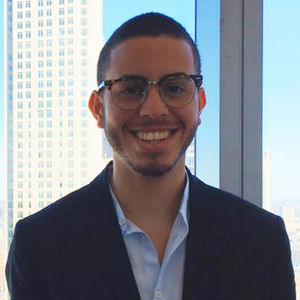
Alex Ruthenburg, PhD Alex Ruthenburg
Chromatin Biochemistry and Structure

Assistant Professor, Molecular Genetics and Cell Biology

B.A. Department of Chemistry, Carleton College, Northfield, MN (1999)
PhD Chemistry (NSF Fellow), Department of Chemistry and Chemical Biology, Harvard University, Cambridge, MA (2005


Research Summary

Chromatin is the physiologic form of the genome. Rather than mere packaging, chromatin structure appears serve as master regulator of underlying DNA function. Local chromatin structure may be stable for decades, yet is sufficiently dynamic to respond to signaling pathways, potentiating transcriptional program changes in development. Indeed cellular identity and changes thereof are intimately connected to chromatin states -- keeping a neuron a neuron and not a liver cell. What are the molecular mechanisms factors that control chromatin structure?

The unifying theme of our lab is the elucidation of molecular mechanisms underlying genome management using the toolkits of biochemistry, chemical and structural biology; in particular, we are interested in how posttranslational modifications and noncoding RNA can control chromatin structure. Our research spans several traditional disciplines, ranging from discovery biochemistry and chemical biology to mechanistic characterization with biophysical methods coupled with X-Ray structure to address fundamental questions in chromatin biology. Projects ideally will transition from discovery biology to detailed molecular and structural investigation.


Selected Publications

Alexander J. Ruthenburg, Haitao Li, Dinshaw J. Patel, C. David Allis. Multivalent engagement of chromatin modifications by linked binding modules. Nat. Rev. Mol. Cell Biol. 8: 983-94 (2007). With accompanying poster: “Readout of histone marks by chromatin binding modules.”

Sean D. Taverna, Haitao Li, Alexander J. Ruthenburg, C. David Allis, Dinshaw J. Patel. How chromatin-binding modules interpret histone modifications: lessons from professional pocket pickers. Nat. Struct. Mol. Biol. 14: 1025-40 (2007).

Alexander J. Ruthenburg, C. David Allis, Joanna Wysocka. Methylation of lysine 4 on histone H3: intricacy of writing and reading a single epigenetic mark. Mol. Cell. 25: 15-30 (2007).

Alexander J. Ruthenburg, Wooikoon Wang, Daina M. Graybosch, Haitao Li, C. David Allis, Dinshaw J. Patel, Gregory L. Verdine. Histone H3 recognition and presentation by the WDR5 module of the MLL1 complex. Nat. Struct. Mol. Biol. 13: 704-712 (2006).

Yali Dou, Thomas A. Milne, Alexander J. Ruthenburg, Seunghee Lee, Jae W. Lee, Gregory L. Verdine, C. David Allis, Robert G. Roeder. Regulation of MLL1 H3 K4 Methyltransferase Activity by its Core Components. Nat. Struct. Mol. Biol. 13: 713-719 (2006).

Heather C. Losey, Alexander J. Ruthenburg, Gregory L. Verdine. Crystal structure of Staphylococcus aureus tRNA adenosine deaminase TadA in complex with RNA. Nat. Struct. Mol. Biol. 13: 153-159 (2006).

Hua Wei, Alexander J. Ruthenburg, Seth K. Bechis, Gregory L. Verdine. Nucleotide-dependant domain movement in the ATPase domain of a type IIA DNA topoisomerase. J. Biol. Chem. 280: 37041-37047 (2005).

Alexander J. Ruthenburg, Daina M. Graybosch, John C. Huetsch, Gregory L. Verdine. A superhelical spiral in the Escherichia coli DNA gyrase A C-terminal domain imparts unidirectional supercoiling bias. J. Biol. Chem. 280: 26177-21184 (2005).


© 2009 Cell and Molecular Biology ® The University of Chicago
Molecular Biosciences Graduate Programs
University of Chicago
920 E. 58th St., Rm. 1105
Chicago, IL 60637
phone: 773/702-8037
fax: 773/702-3172

Maps & Directions

to CMB homepage